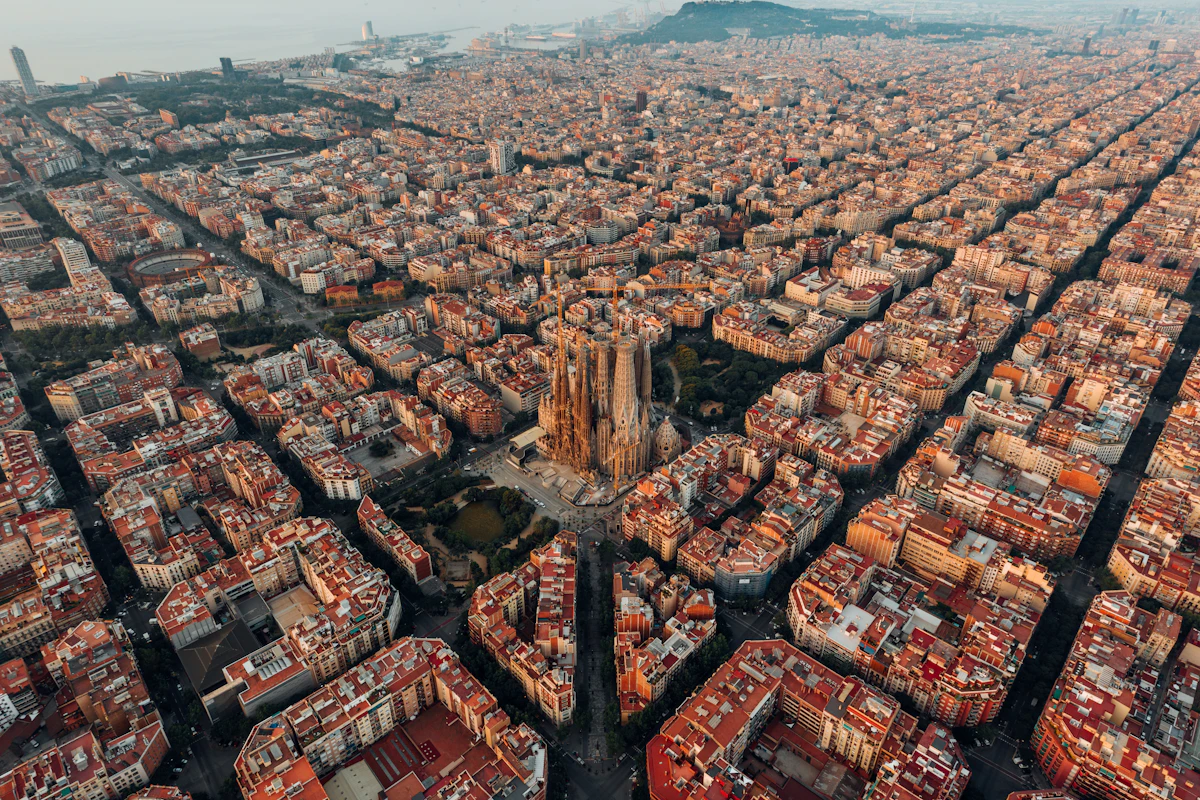
Barcelona is what happens when a city decides that straight lines are boring and commits fully to the consequences. Every building curves, every surface is tiled, and the Sagrada Familia rises above it all like a sand castle designed by a genius who never heard the word "impossible."
I came in November, when the summer hordes had retreated and the Mediterranean light softened to something warm and golden. The beaches were empty enough to walk, the tapas bars were full enough to buzz, and the temperature was perfect — 18°C and sunny, which felt like a personal insult to Stockholm's November darkness.
Inside the Sagrada Familia
Nothing prepares you for the inside. From the outside, the Sagrada Familia looks like an elaborate construction site with a church attached. Inside, it's a forest of light. The columns branch upward like trees, the stained glass throws rainbow patterns across stone, and the whole space feels less like a building and more like standing inside a kaleidoscope. I've been to Indian temples that produce similar awe — but Gaudí's version uses light instead of incense.
El Born & the Gothic Quarter
The old quarters of Barcelona are a labyrinth in the best sense — winding streets that open onto unexpected plazas, tiny bars pouring vermouth, and the kind of graffiti that belongs in galleries. El Born at night, with warm light spilling from doorways and the sound of Spanish guitar from somewhere you can never quite find, is one of Europe's great experiences.
The Market Life
La Boqueria on La Rambla gets all the fame, but the Santa Caterina market in El Born is where the locals actually shop. Catalan charcuterie, manchego, Padrón peppers, and jamón carved paper-thin — with a glass of cava on the side, because this is Barcelona and it's always appropriate.
This is where your full story continues...